Wednesday, May 23, 2012

How Awesome is This?

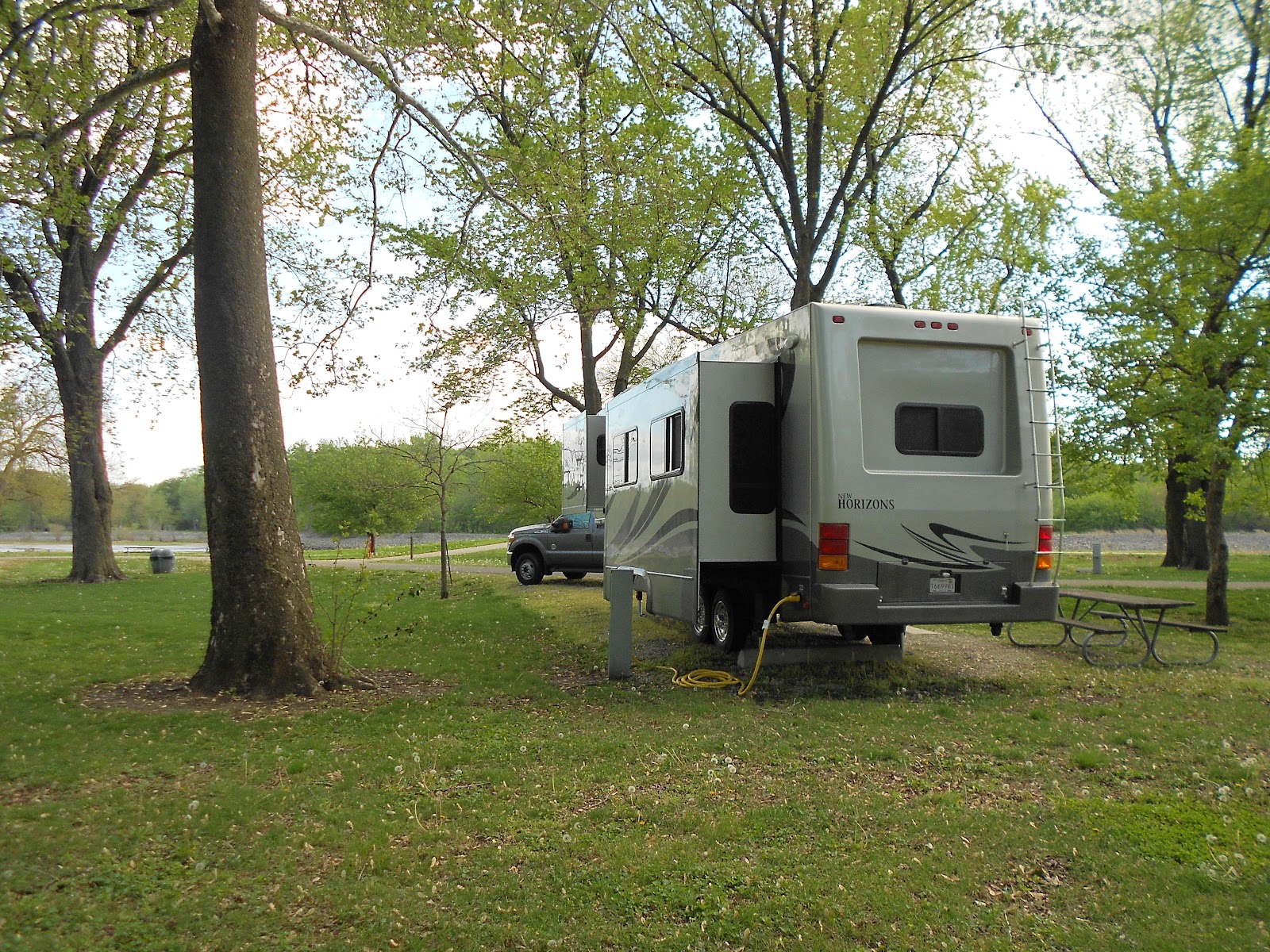
So far we have been able to find uncrowded off the grid places to camp for free that offer loads of hiking and even some fishing. All we need to do is provide our own water, food, electricity, and waste removal! Whether we are able to find these places after Memorial Day Weekend kicks off the travel season will be the big question.

Since we previously haven't been to any of the places we camp, it's always a little exciting and scary wondering what we'll find. When we rolled into the Soldier Creek Wilderness Area and the Nebraska National Forest in the far NW corner of Nebraska, our expectations were definitely exceeded.

We were all alone at the top of a bluff overlooking a pretty little valley with three creeks.

We did get some company when a couple showed up to do some exploring in the wilderness area with their four mules.

We had a dozen options for 10-12 mile hikes every day. You could hike all day and not see any signs of development. Not even a plane in the sky.

This area was very active in the last major war between the US and the Plains Indians in the 1870s. We were about 7 miles up a dirt road away from Fort Robinson. George Armstrong Custer spent some time here before heading north to meet his fate. Soldiers from Fort Robinson were also responsible for the massacre at Wounded Knee and the capture/death of Crazy Horse. There were a few old military wagon roads through the wilderness area.

We weren't next to the water, but 50 yards away from our rig was this little gem of a creek.

Hiking in all directions you could find little pools teeming with small, wily native brook trout, brown trout and some rainbows.


Native brook trout.

Native brown trout.

We explored the strangely eroded Legend Cliffs which bordered the east side of our valley. We hiked all day for seven days and didn't see any other people.


There were a few little ledges to get out on and sit for a while. This one almost looked like it was made for walking the plank.

Susan didn't feel like checking out the view from the tip (she's the smart one).

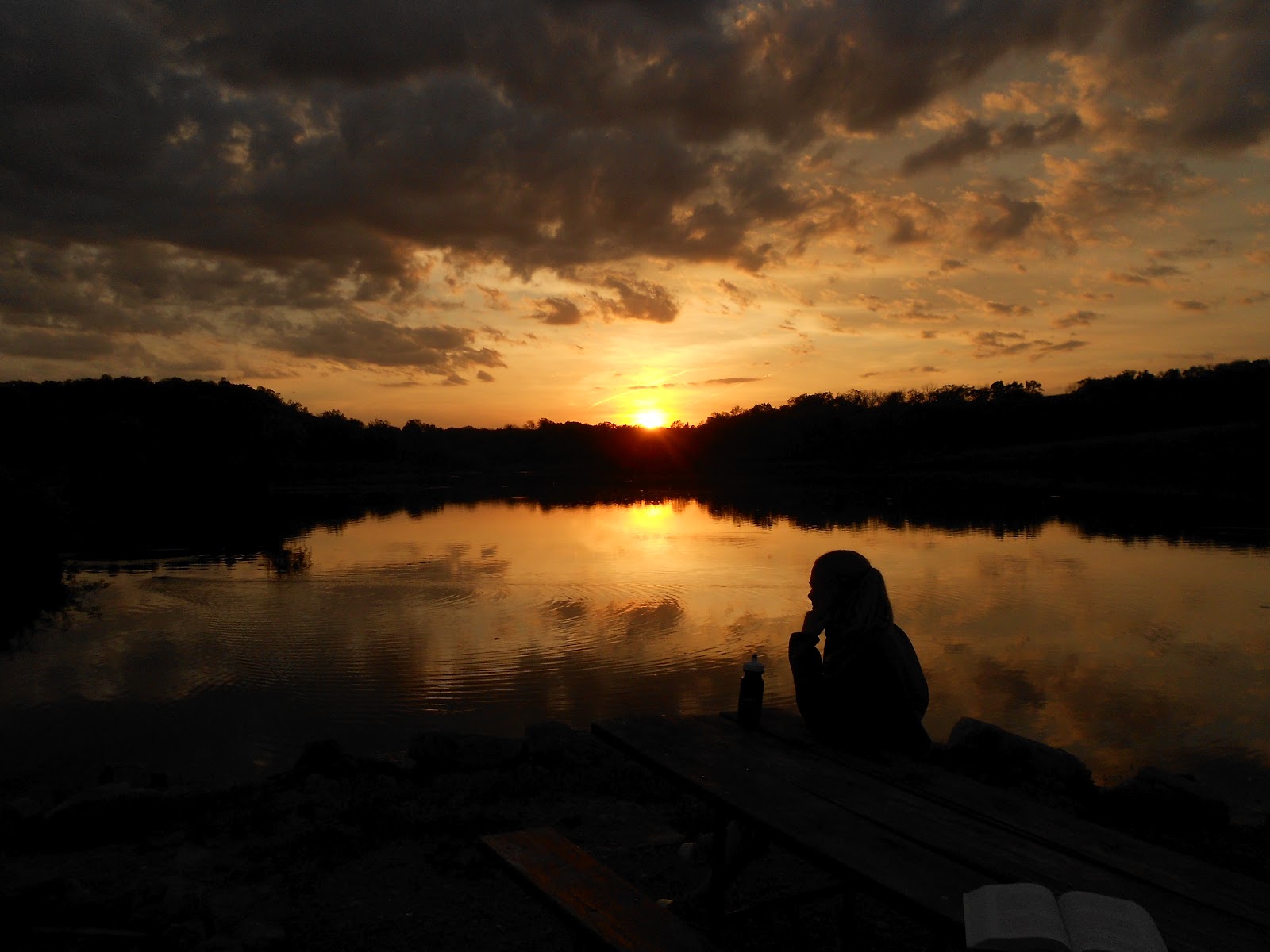
The best part was happy hour and the sunset at the end of each day.


Sunday, May 20, 2012

Apocalypse NE

Nebraska is a fossil hunter's paradise. One of the finest fossil sites in Nebraska and all of North America is the Ashfall fossil beds in the uncrowded northern part of the state Ashfall Fossil Beds.

There is a hot spot in the earth's crust that the North American Plate slowly slides over as it moves from the northeast to the southwest. This hot spot currently sits near Yellowstone Park. Every 2-3 million years this hot spot explodes in a spectacular fashion. The next eruption is due relatively soon (within the next 100,000 years or so). About 12 million years ago the hot spot erupted in an area that is now Southwest Idaho. The debris cloud drifted east and left a distinctive layer of white powdered-glass ash that can be identified in Idaho, Wyoming, South Dakota, and Nebraska.

Most of the animals living in the savanna-like grasslands at the time survived the initial ashfall, but as they grazed across the ash covered plains, their lungs began to fill up with the abrasive powder and they began to die.

What makes Ashfall so unique (and heartbreaking) is that it is the largest collection of nearly fully intact animals. They are preserved in their death positions in a mass grave at an ancient watering hole, complete with evidence of their last meals, unborn animals, and with their last steps recorded in the stone. While this may have also occurred in other parts of Nebraska and other states, the glacial action to the east of Ashfall eliminated those fossil remains, while the erosion of the Rocky Mountains by the Platte River and other watersheds took care of any remains to the West. Ashfall is just in the sweet spot in between.

Even after 10 million years, there is only a thin layer about 8 feet deep that was deposited above the fossil layer. Amazingly, this fossil field, yielding more than 400 nearly complete skeletons, wasn't discovered until the 1970's.

Rhinos used to roam North America. These are the remains of a pregnant rhino.
A mass grave at a watering hole. These animals, mostly rhinos, died together, adults next to juveniles.
There were originally five different species of horses native to North America all of which went extinct. Here is a three-toed horse.
Other animals preserved here include three different species of camels, saber-toothed deer, turtles, and three species of dog.
They figure that the site will be completely excavated within 25-30 more years. There are excellent unpaid internship positions available if anyone is interested in the work.

Tuesday, May 15, 2012

Tails from the Back Seat: Zen & The Art of Priority Seating


Susan and John finally figured out there was a seating priority for their passengers, Karly & Jake, that guaranteed calm and tranquility in the back seat for long stretches of travel.

Karly's pole position was behind the front passenger seat where with a slit of her  eyes, barely lifting her head, she could keep track of every move of the driver.  This seat was also warmed by the early morning sun, acting as a sauna to comfort the creaky bones of the elder Karly and allowing her ample room to stretch out as Jake curled up in a shaded corner behind the driver.

Not to mind, in this position, Jake was rewarded with his favorite indulgences.  With just a tap of his nose under the driver's elbow or a snuggle of his chin on the driver's shoulder, neck rubs and head massages were bound to be forthcoming.

For hours on end, Jake also enjoyed attentively looking out the window, regardless if open or closed, to keep track of all that passed by.  If there really is an "Art of Racing in the Rain", Jake is perfecting it.


Saturday, May 5, 2012

Iowa State of Mind


As a rural state with a small population, Iowa seems to punch above its weight class on many levels. Every four years it becomes the center of the political world and every year it seems to be the location for some interesting movie (usually about a sports underdog). It's also the kind of place where complete strangers will wave to you while they drive by the small town diner where you're enjoying breakfast. As we headed north into Iowa to visit friends, it was the Dutch and German "cuisine" that sparked our interest. Iowa is best known for its corn, but its what that juicy corn does for the cattle, deer, pigs, and other wild game that is really special. Add to that the skill with which the Dutch and German artisans manage to butcher, season, smoke and cure these meats, and Iowa becomes a carnivore's dream come true.

Our first stop was the historic town of Pella. Founded by Dutch settlers in the 1840's, Pella now prides itself on that Dutch heritage including its annual Tulip Festival, the Pella Bologna unique to their meat shops, and what seems to be the largest selection of wooden shoes available this side of the Netherlands. They also have the largest working windmill in The US still used to grind flour (Iowa also leads the nation in the wind-powered generation of electricity).

We decided to splurge and stay at a state park that actually provided electricity. We were right on the Des Moines river near the site of Red Rock Lake, the largest lake in Iowa.

Following our stay at Red Rock Lake, we spent eight days in Cedar Rapids with our friends Denny and Cheryl. Denny and Cheryl did their best to make sure we visited every micro brewery, winery, meat locker and interesting restaurant in the region. With their wine cellar holding one of the largest selection of Rocinante wines in the US, they also hosted two wine tastings at their house which saw some of the largest per capita consumption of Rocinante wines ever recorded.

Two visits were particularly noteworthy. 

The Millstream Brewery at the Amana Colonies just south of Cedar Rapids (http://www.millstreambrewing.com/) has one of the best lineups of beers we've tasted anywhere. They are probably hard to find outside of Iowa, but are worth the effort to locate. 

The Cedar Ridge Winery and Distillery (http://www.crwine.com/)  was also a treat. While Iowa's climate makes red wine production difficult, some of the hybrid white grape varietals do really well. The LaCrescent is as aromatic and brightly textured as any Riesling from CA and OR. It's has just enough residual sugar to taste great with spicy Asian dishes. The distilled spirits were simply outstanding. The whiskey, bourbon, and vodka are textbook perfect. The Clearheart Gin in particular was as fine an example of the art as you'll find. It is lighter on the harsh juniper notes and emphasizes the aromatic cucumber, orange and cardamon botanicals.

Our final nights in Iowa were spent in La Mars. This small western Iowa town is the home of Wells' Dairy, the maker of Blue Bunny ice cream. There is more ice cream made in Le Mars than any other one location on earth, allowing the local chamber of commerce to claim the town as the Ice Cream Capital of the World. At 250,000 gallons per day, that's a lot of ice cream (and the town smells like pralines and waffle cones). 
Since it's impossible to survive on ice cream alone, we also made a pilgrimage to Archie's Waeside (http://www.archieswaeside.com/ordereze/default.aspx), a family-owned steakhouse dating back to the 1940's. We enjoyed a 28 ounce, dry-aged, center cut  fillet for about the same price we'd pay for a couple of burgers and pints of beer in Napa Valley. Life is good!

Our last night in Iowa was spent at a small city park in Le Mars. We've been able to find multiple waterside campsites either for free or for under $10/night. It's probably just early in the season. It will be amazing if we're still finding these empty/free spots during the summer.


Friday, April 27, 2012

Chart of the Day

GDP was reported lower than expected No!!! Really???

There are many economic indicators that are bandied about on a weekly basis. Most are massaged by the government and misreported by the major media outlets. Since virtually the only economic growth we now see is attributable to public sector spending, once you distill everything down to the essentials, the only ratio that really matters for the US economy is the change in US public debt versus the change in US GDP. In the first quarter of 2012, The ratio of US public debt ($359.1 billion) and US GDP ($142.4 billion) has now hit 2.52x and is rising. In other words, it now takes $2.52 in new debt to increase GDP by $1.


The problem with debt is that once you reach a tipping point there's no easy way out. Most of the "growth" generated in our economy over the past 20 years has been fueled by debt, not productivity improvements or private sector investment. We're far past the point where additional debt can fuel meaningful additional growth. We can't can't cure the hangover with more shots of whiskey.

This is important for anyone starting off with their career, trying to save for retirement, or already living in retirement. Without meaningful economic growth and with unsustainable debt loads, the days of the US dollar as the world's reserve currency are over. Cutting entitlements or other government programs is nothing compared to the pain and suffering that will result here when the US dollar is no longer reserve currency that most other nations need to hold in order to conduct international trade.

Countries are already making trade agreements and transactions that exclude the dollar. It's likely that one of the BRIC countries will introduce a gold-backed currency at some point in the near future that will replace the dollar. A dollar collapse would most likely follow.
Lack of growth due to excessive debt leading to an inevitable fiat currency crisis are the real threats to the prosperity of every person in this country.

Tuesday, April 24, 2012

The Open Road

After 16 days at the factory learning how to operate our new home, we were finally ready to leave the nest and strike out on our own. Karly and Jake were also ready to find some new open fields to play in.
As we prepared to hit the road, we knew that our rig would never again look this good or work this well. It's about to get dusty, muddy and be stressed to its limits!
It didn't take long for the Knuckleheads to relax and get used to the rhythm of the road.
Our first stop would be the Atchison State Fishing Lake in Atchison, KS. Kansas maintains public fishing lakes throughout the state. They offer beautiful sites for fishing and, best of all, free camping. Since there are no utilities available at the lakes, it seemed like a good spot to test out our off-grid boon docking skills. Since Atchison was the birthplace and childhood home of Amelia Earhart, it also seemed appropriate to stay there on the 75th anniversary of her disappearance over the Pacific.

We had to negotiate over three miles of steep Kansas farm roads to reach the lake, but were rewarded by having the whole place to ourselves.

After a nice hike in the preserve around the lake, we broke out the dutch oven for the first time and cooked a Mexican feast. We ended the day with a few beers from the Tall Grass Brewery in Manhattan, KS (www.tallgrassbeer.com/ )  a nice sunset, and watching the local family of beaver splash around in the water by our campsite.


Tuesday, April 17, 2012

Heading East Into the Sunrise

We're finally packed up and ready to move. The estate sale is over, we have some items in storage with a friend, we've decided what few items we'll take with us, and the Salvation Army came by with a truck to pick up the rest. Like a reverse-commute Grapes of Wrath, we're heading east from California towards the heartland to pick up our new rig at the factory. After decades of collecting things, it feels good to have whittled our belongings down to where they can fit in a small pickup truck and compact car (including two dogs!).
We made it to the Utah/Nevada border on the first day and stayed in the little Casino town of Wendover, UT, nestled at the edge of the Great Salt Lake Desert. West of Salt Lake City, UT is about 15 miles of dead alkali flats. Then you hit the equally dead Great Salt Lake. Fifty miles later and you've reached the desert. From that point it's 75 miles of the most blistering, desolate land outside of Death Valley. It's been a graveyard for oxen, horses and people since the early 1800's. It nearly killed the redoubtable Jed Smith when he made the first crossing in 1827; it's the same desert that betrayed the Donner party, killed off their cattle, weakened them, slowed them down so that when they hit the Sierra they were too late to make it across. Fortunately, we didn't meet the same fate as the Donner party and were able to get across the salt flats as the sun was rising.
That's not snow, just mile after mile of salt. Say what you will about old Wendover, but it must have seemed like an oasis after crossing this old monster on foot and cart.

After another night in Denver, and dinner at the Buckhorn Exchange http://www.buckhorn.com/ (some of the best rattlesnake, elk, and bison anywhere), we were finally into the great plains of western Kansas. This is a place very different from the mountainous west. Here the sky is a bowl, the earth is a disc, and the eye is invited to notice the small things because the large ones are so characterless. Slowly these plains give way to the rolling hills and ridges of eastern Kansas.

And now we sit happily in Junction City, KS, the home of New Horizons RV.
Our first campsite is a hook-up at the factory where we've been settling into the rig and learning how all of our systems work. Every system is different, from the on-demand heat/hot water system, to the solar controllers, to the operation of the toilet. Even learning how to tow and maneuver has been an adventure. Our first campsite comes with many free services and a first-rate manufacturing crew, making Junction City a great first stop.
And let's not forget our first experience with Tornado Alley. This little gem dropped down about 50 miles west of Junction City near Salina, KS.

There were over 100 tornadoes reported over the weekend. Luckily, Junction City seemed to be in the corridor between two major storm tracks. Although we didn't get much sleep Saturday night, we didn't see much more than a little lightning, modest winds and a few rain showers.